
Europe has built the foundation for energy independence, yet it is dependent on foreign fossil fuels.
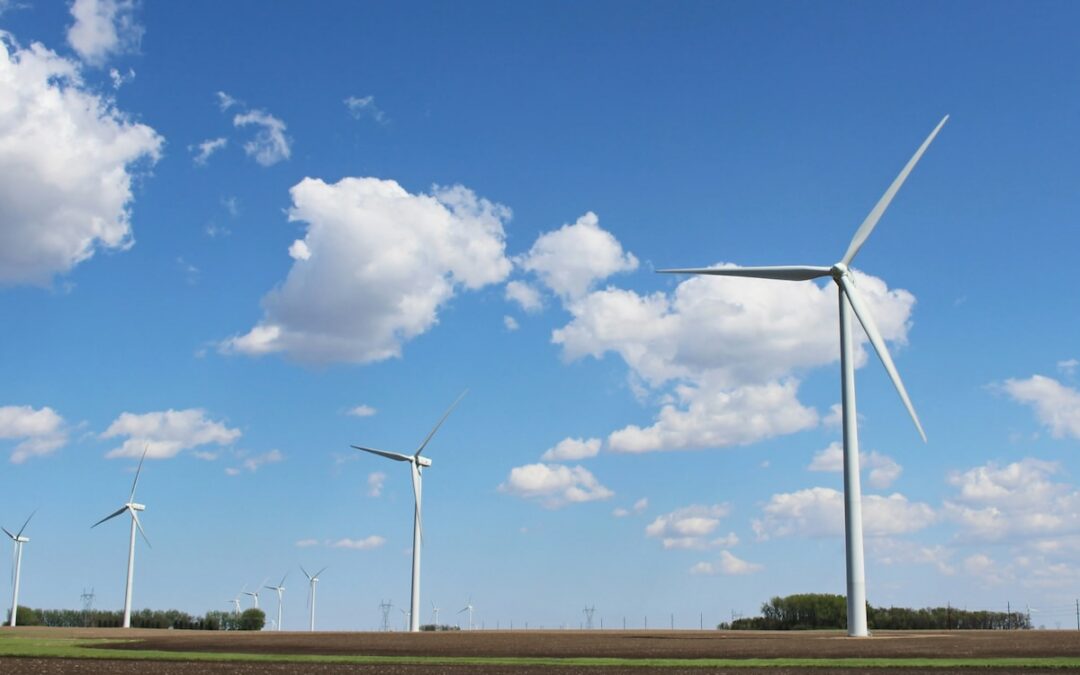
Across the North Sea, wind turbines generate vast amounts of clean power. Across Spain, Romania, Greece, and the Mediterranean, solar resources are abundant. In the second quarter of 2025, renewables supplied 54% of EU electricity, and Denmark generated 94.7% of its power from clean sources. Yet millions of Europeans struggle to afford energy, industries face some of the world’s highest power costs, and more than €7 billion of clean electricity is curtailed each year because the grid cannot absorb it. Europe is not short of renewable energy. It is short of the infrastructure needed to capture, store, and deliver it when people need it. Kinetix provides that missing layer: affordable storage that turns wasted clean generation into usable power.
The renewable power Europe needs already exists.
Wind energy alone could meet Europe’s electricity demand, and the continent requires a small share of its land area to reach a fully renewable power system. Solar became the EU’s largest electricity source for the first time in June 2025, generating 22% of all electricity. Renewable costs continue to fall, with the vast majority of newly commissioned projects worldwide producing power below fossil fuel costs. The generation side of Europe’s energy transition is no longer the central challenge. The missing link is storage: the ability to shift clean power from moments of oversupply to moments of peak demand.
Without storage, Europe remains trapped by imported fuel and volatile gas markets.
The EU’s energy import bill reached €427 billion in 2024, while more than €1 billion per month still flowed to Russia despite sanctions. After replacing Russian pipeline gas with liquefied natural gas from global markets, Europe reduced one dependency but inherited another – at a much higher cost. Since 2022, European industrial gas prices have remained far above those in the United States and China, weakening the competitiveness of domestic manufacturing. At the same time, more than 1,700 gigawatts of renewable projects are stuck in grid connection queues across 16 countries. The infrastructure meant to enable energy independence is one of the main constraints preventing it.
The burden falls on families, workers, and entire industries.
Between 35 and 72 million Europeans face energy poverty. As of 2024, 9.2% of EU citizens could not keep their homes adequately warm, with rates reaching roughly 30% in Portugal, Bulgaria, Greece, and Lithuania. Household electricity prices remain near crisis-era highs. Fossil-fuel air pollution continues to cause an estimated 239,000 premature deaths across Europe each year, while coal power plants alone are responsible for tens of thousands of deaths. Meanwhile, energy-intensive industries are cutting production, delaying investment, or relocating to lower-cost markets. Europe’s economic future is being weakened by an energy system that wastes one of its greatest advantages: abundant clean power.
Kinetix turns curtailed renewable generation into dispatchable, affordable energy.
At projected capital costs of €55 per kilowatt-hour, Kinetix’s flywheel technology makes large-scale storage economically viable across Europe at a fraction of conventional storage costs. The more than €7 billion in renewable electricity curtailed annually becomes capturable value instead of wasted generation. Kinetix stores excess wind and solar power during periods of oversupply, then dispatches it during evening peaks, low-wind periods, and other high-demand windows. By replacing expensive gas-fired generation at the margin, stored renewable energy can reduce the power prices that shape household bills and industrial operating costs.
Kinetix also helps bypass Europe’s grid bottleneck.
Kinetix systems can co-locate with existing wind and solar facilities, using interconnection points that are already in place. This allows renewable operators to overbuild generation capacity beyond their grid connection limit and store excess production rather than curtail it. The same model applies to island communities that still rely on diesel generators. Wind or solar paired with Kinetix can be deployed on existing infrastructure, helping islands and remote communities achieve energy independence without waiting years for undersea cables, new transmission lines, or full grid modernization.
Stored clean energy strengthens the grid while reducing exposure to price shocks.
As variable renewables become a larger share of Europe’s power mix, grid operators need fast-responding resources to maintain frequency and voltage. Kinetix flywheels respond in under 100 milliseconds, providing stability services traditionally supplied by gas peaker plants, but without emissions or fuel costs. During supply disruptions, demand spikes, or extreme weather, stored clean energy helps prevent the price surges that can push households into debt and force factories to shut down. Every deployment makes the grid more resilient for the communities connected to it.
Affordable storage can lower bills and improve public health.
By displacing gas-fired generation, stored renewable power reduces Europe’s dependence on volatile global fuel markets. This impacts the millions of Europeans who struggle to heat their homes. As stored clean energy undercuts coal and lignite on cost, the dirtiest power plants lose their economic rationale. The result is not only lower energy costs, but cleaner air, fewer pollution-related illnesses, and progress toward reducing the hundreds of thousands of premature deaths linked to fossil-fuel pollution each year. Lower pollution also means lower public health costs and more public resources available for schools, infrastructure, and local services.
Affordable energy storage helps keep European industry in Europe.
Since 2022, European industrial gas prices have remained dramatically higher than those in competing markets, contributing to production cuts, closures, and relocation risk across the continent. When stored renewable energy brings electricity costs closer to global competitors, manufacturers have a stronger reason to invest and expand in Europe. For Greek islands and Mediterranean communities that rely on diesel power at around €0.25 per kilowatt-hour, stored solar energy can provide a lower-cost alternative and unlock economic opportunities long constrained by expensive fuel imports.
Money spent on imported energy can stay in European communities.
Every euro Europe saves on imported gas can be redirected into domestic infrastructure, local jobs, renewable deployment, and community resilience. The EU’s €427 billion energy import bill represents one of the continent’s largest economic leakages. Stored renewable energy helps reverse that flow. Instead of sending money abroad for fuel, Europe can invest in grid upgrades, installation and maintenance jobs, and its growing clean energy workforce. Each Kinetix deployment strengthens this cycle: lower costs enable more renewable investment, more renewable investment drives further cost reductions, and more value remains in the communities that generate the power.
Kinetix’s mission is to make clean energy affordable for everyone, everywhere, day and night.
For Europe, affordable storage means breaking free from dependence on distant suppliers, volatile fuel markets, and aging infrastructure. The continent has the wind and solar resources to power itself. With storage, that clean power can reach families, factories, and cities when it is needed. Families can heat their homes affordably. Industries can compete globally. Island communities can move beyond diesel. Renewable operators can capture the full value of the energy they produce. With Kinetix, Europe can turn wasted renewable generation into energy independence – and realize the promise of the clean power it already has.