
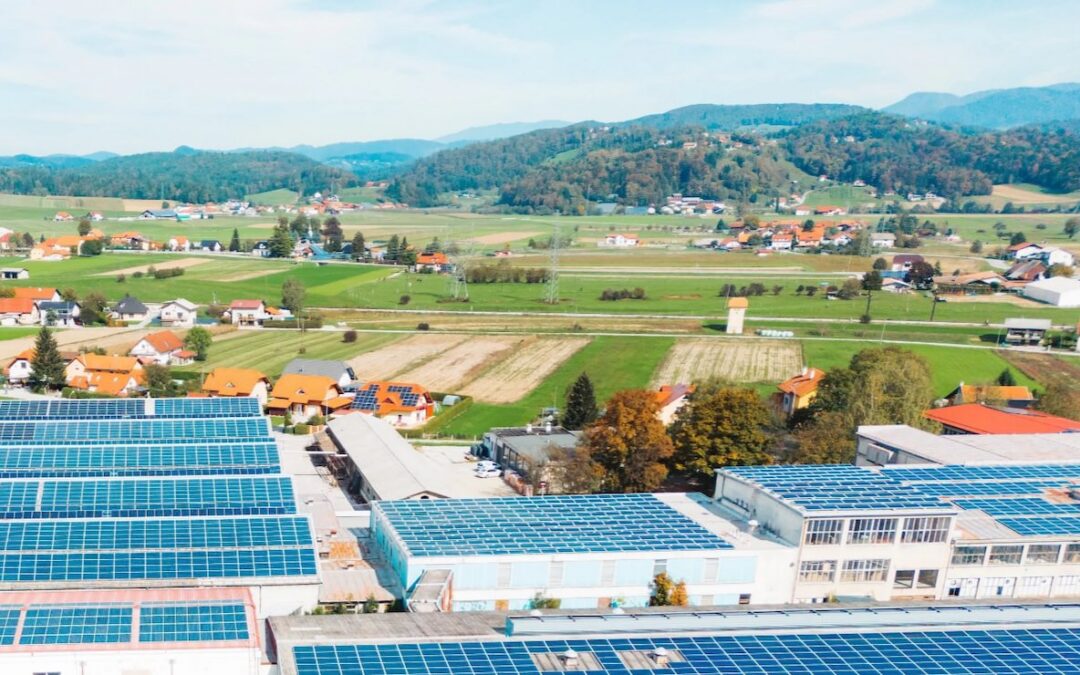
Data centers arrive promising 21st-century prosperity, but too often leave 20th-century pollution behind.
Communities across the United States are competing aggressively to attract these facilities, drawn by construction jobs, long-term employment, tax revenue, infrastructure investment, and the prestige of hosting the digital economy. Yet the enormous power demands of data centers often lead to new natural gas plants and diesel backup systems, adding pollution to the same neighborhoods that were promised economic growth. What begins as opportunity can quickly become a public health burden. Communities are not opposed to prosperity. They are opposed to paying for it with polluted air, higher electricity bills, and long-term health risks. Kinetix provides the missing piece: affordable energy storage that enables data centers to run on reliable clean power without forcing communities to choose between growth and health.
Data centers can deliver economic transformation.
They bring billions of dollars in construction investment, permanent skilled jobs, modern infrastructure, and integration into the global digital economy. In Loudoun County, Virginia alone, data centers paid $640 million in state taxes and $1 billion in local taxes in 2022. More than 30 states now offer targeted incentive packages to attract these facilities. For communities seeking growth, data centers can represent a once-in-a-generation opportunity.
But the scale of their energy demand is unprecedented.
U.S. data centers consumed 183 terawatt-hours of electricity in 2024, more than 4% of total national consumption, with projections pointing to 12% or higher by 2030. A single hyperscale AI campus can consume as much electricity as 100,000 homes. This level of demand does not simply plug into the existing grid without consequences. It forces utilities, regulators, and communities to decide what kind of power system will support the next era of digital infrastructure.
Natural gas remains the default because clean alternatives have struggled to compete at this scale.
Nuclear power remains too expensive and too slow to deploy for most near-term data center demand, with new construction costing $6,400 to $12,700 per kilowatt compared to roughly $1,300 per kilowatt for natural gas plants. Conventional solar and battery systems can work under ideal conditions, but they often require abundant sunlight, favorable grid access, and the ability to stack multiple revenue streams. Many communities lack those advantages. Natural gas accounted for 40% of total U.S. electricity generation in 2025, while fossil fuels collectively supplied roughly 57%. In Virginia, data centers are the primary driver behind 28 gigawatts of projected load growth, prompting proposals for new gas generation across the region.
The pollution burden falls directly on host communities.
In California, health impacts linked to data center pollution tripled between 2019 and 2023. Researchers project data centers could contribute to 600,000 asthma-related cases nationwide by 2030 and more than $20 billion in public health costs. In Virginia, data centers rely on more than 9,000 backup diesel generators, and one analysis estimated that even limited generator use already produces nearly $300 million in annual health costs and 14,000 asthma-related impacts across multiple states. Communities are seeing the trade-off. More than $64 billion in data center projects were delayed or canceled between mid-2024 and early 2025 amid organized public opposition. The resistance is not anti-growth. It is a demand for a cleaner, sustainable way to grow.
Solar plus Kinetix delivers continuous power at lower cost without local pollution.
Kinetix’s flywheel technology, paired with renewable generation, provides the 24/7 reliability data centers require while handling extreme and fluctuating loads. At projected capital costs of $63 per kilowatt-hour, a fraction of conventional storage alternatives, Kinetix changes the economics of clean energy for large-load customers. Data centers receive dependable power. Communities receive cleaner air. Each unit operates for 20+ years with no performance degradation, providing the long-term reliability hyperscale operators require. For the communities that organized against $64 billion in gas-powered data center projects, this is the kind of alternative that becomes the obvious choice.
Kinetix performs beyond the ideal locations where conventional storage works best.
Traditional solar-plus-storage systems often depend on perfect conditions: strong solar resources, sophisticated grid infrastructure, favorable interconnection, and multiple revenue streams. Kinetix’s lower storage cost changes that equation. Systems can remain economically viable in regions with more modest renewable resources, whether operating as standalone microgrids, behind-the-meter installations, or grid-connected assets. That makes clean data center power possible across the Southeast, Midwest, Mountain West, and other regions where data center development is expanding rapidly but conventional storage has struggled to compete.
Grid-connected Kinetix systems strengthen local infrastructure instead of simply adding strain.
Large data centers create rapid load fluctuations that can stress local grids and force expensive upgrades. Natural gas plants may provide capacity, but they do not eliminate the volatility and pollution concerns that communities face. Kinetix provides essential grid services, including voltage support, frequency control, and resource adequacy. The system responds in under 100 milliseconds to disturbances, helping stabilize the electrical network around large digital loads. When a data center deploys Kinetix, nearby homes, schools, hospitals, and businesses benefit from a more resilient grid. The infrastructure improves for everyone connected to it.
Communities can capture data center prosperity without the pollution trade-off.
Towns still receive the construction investment, permanent jobs, tax revenue, infrastructure upgrades, and digital-economy presence they were promised. But families do not have to accept higher asthma risk, diesel exhaust, or new fossil fuel plants as the price of that growth. The same projects that once triggered opposition can move forward when clean, reliable power removes the core community concern. Data centers become easier to approve, easier to integrate, and easier to defend as long-term assets.
Kinetix helps reverse the upward pressure data centers can place on local electricity bills.
Traditionally, rapid data center growth can strain the grid and drive prices higher for residents and small businesses. In the PJM region, electricity rates increased up to 20% in the summer of 2025, reflecting in part the pressure of data center demand growth. Carnegie Mellon projects that data centers could raise the average U.S. electricity bill by 8% by 2030, with increases exceeding 25% in Virginia. In Virginia, residential bills are projected to more than double by 2039 under current growth patterns. Kinetix changes the dynamic by adding low-cost, clean, dispatchable supply where demand is growing fastest. Instead of becoming a burden on local ratepayers, data centers can help anchor new clean energy infrastructure that benefits the broader community.
Healthcare and environmental costs can be redirected toward community growth.
When communities avoid fossil fuel pollution, they also avoid many of the hidden costs that come with it: asthma treatment, missed school days, lost productivity, air monitoring, environmental mitigation, and long-term public health burdens. Families save on medical expenses. Local governments invest in schools, infrastructure, public services, and economic development rather than managing the consequences of pollution. These savings compound over decades. A cleaner energy model allows data centers to deliver the prosperity communities expected in the first place.
Kinetix’s mission is to make clean energy affordable for everyone, everywhere, day and night.
For communities evaluating data center projects, affordable storage changes the decision. Towns can welcome the jobs, tax base, infrastructure, and digital investment of the AI era while protecting the health of their residents. The communities that pushed back against $64 billion in projects were not rejecting growth. They were rejecting pollution, higher bills, and preventable health risks. Kinetix removes the reason for opposition by making reliable clean power economically viable at data center scale. With Kinetix, communities can say yes to prosperity without saying yes to pollution.