
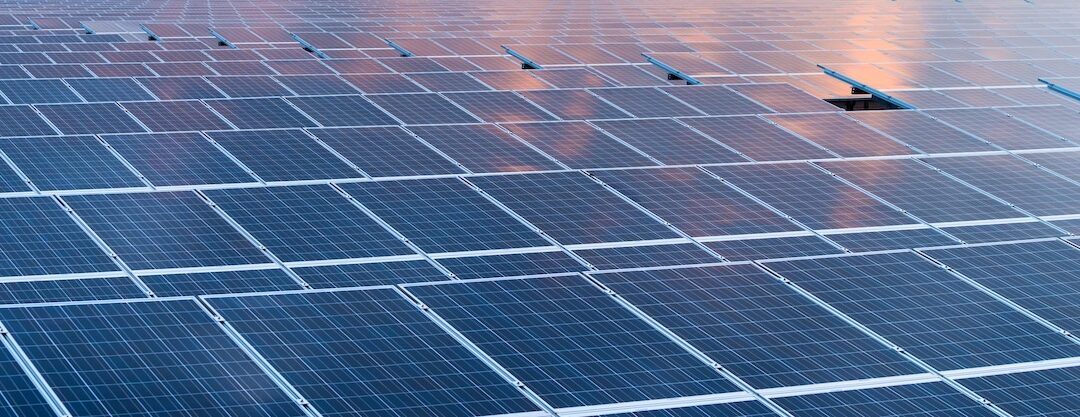
Clean energy has never been cheaper to produce, yet household electricity bills keep climbing.
Solar and wind have delivered on their core promise: they now produce some of the cheapest electricity in history. Yet families are not fully seeing those savings because the grid still depends on fossil fuel plants when the sun sets, demand rises, or renewable output falls. That creates a growing disconnect between what clean energy costs to produce and what households actually pay. America is not short of cheap clean power. It is short of affordable storage that can capture that power and deliver it when families need it. Kinetix provides that missing link: low-cost storage that turns abundant renewable generation into reliable electricity day and night.
Solar and wind have already won on cost.
Solar photovoltaic power is now 41% cheaper than the lowest-cost fossil fuel alternative, according to IRENA’s most recent analysis. In 2024, 91% of newly commissioned renewable projects produced electricity below fossil fuel costs. In regions rich in sun and wind, clean power floods the grid during peak production hours, sometimes driving wholesale prices near zero. The generation side of the clean energy transition is no longer the central challenge. The missing piece is storage: the ability to move low-cost renewable power from the hours when it is produced to the hours when it is needed.
Today’s storage economics still limit where clean energy can go.
Battery prices have fallen 93% since 2010, and battery storage now performs well in premium markets such as California and Texas, where high renewable penetration and extreme price volatility create strong economics. Those two states hold more than 70% of all U.S. battery capacity. But across much of the country, where renewable output is more moderate and price swings are less dramatic, storage projects still struggle to justify their capital costs. The technology exists. The economics determine where it can be deployed.
The consequences fall hardest on families already under pressure.
One in three U.S. households experiences energy poverty, struggling to afford adequate electricity. More than 21.5 million households are currently behind on utility bills. Nearly one-third of low-income Americans report skipping food or medication to cover energy costs. Extreme weather makes the burden worse, as grid instability can trigger price spikes that push families into long-term debt. Clean energy may be abundant, but without affordable storage, it cannot reliably protect the people who need relief most.
Kinetix makes stored solar cheaper than the gas plants that set peak electricity prices.
The United States operates roughly 1,000 natural gas peaker plants that generate power at $151 to $198 per megawatt-hour. These plants turn on during the most expensive hours of the day: when solar fades, demand rises, and families turn on lights, cook dinner, run appliances, or cool their homes. Those peak-hour costs shape the prices that ultimately show up on electricity bills. At projected capital costs of $63 per kilowatt-hour, Kinetix flywheel technology captures low-cost clean power when it is abundant and releases it during the hours when fossil fuel generation is most expensive. The objective is straightforward: make stored clean electricity cheaper than fossil fuels across the grid.
Lower storage costs bring clean energy to the communities batteries have not yet reached.
More than 70% of U.S. battery capacity is concentrated in California and Texas. Much of the rest of the country has been left waiting because current storage economics do not work as easily in moderate-price markets. Kinetix changes that equation. Each unit ships in a standard 20-foot container and can be installed wherever the grid needs flexible, affordable storage: utility-scale renewable projects, solar-plus-storage sites, community microgrids, rural cooperatives, and constrained distribution networks. When storage becomes affordable beyond premium markets, the benefits of clean power can reach the entire country.
Affordable storage also protects families when the grid fails.
During Texas’s 2021 winter storm, more than 4.5 million residents lost power, while natural gas units accounted for 58% of generation failures. Wholesale electricity prices spiked to $9,000 per megawatt-hour, compared with typical levels near $50. The bills and debts that followed showed how exposed families remain to fragile fuel-based systems. Kinetix flywheels respond in under 100 milliseconds, providing instant frequency and voltage support along with stored power delivery. That speed helps stabilize the grid before small disruptions become cascading outages and before volatility turns into unaffordable bills.
When electricity bills fall, families feel the impact immediately.
Replacing expensive peaker plants with stored renewable energy reduces system costs, and those savings can flow directly to households. Families keep more of their income. Low-income Americans currently forced to choose between electricity, food, and medication gain breathing room. Small businesses have more cash to reinvest. Energy poverty begins to recede when electricity becomes affordable, predictable, and less exposed to volatile fossil fuel prices.
Stable energy prices give communities the confidence to plan and grow.
When electricity costs stop swinging, long-term decisions become easier. Schools, housing, infrastructure, and manufacturing projects can move forward on stronger economic ground. Energy-intensive industries, from agriculture and manufacturing to data processing, locate where power is affordable and reliable. Regions with stable electricity become more attractive for investment, employment, and local development. Every dollar saved on energy is a dollar that can stay in the community and circulate through wages, services, and new economic activity.
Each deployment strengthens the cycle that makes the next one easier.
Every Kinetix installation lowers grid costs, improves resilience, supports additional renewable investment, and creates better conditions for future storage deployment. Falling costs fuel adoption. Adoption drives scale. Scale pushes costs down further. This dynamic is already visible across the broader storage market: the United States installed a record 57.6 GWh of new storage capacity in 2025, with two-thirds deployed in states driven by economics rather than clean energy mandates. The transition accelerates when stored clean energy becomes the obvious financial choice.
Kinetix’s mission is to make clean energy affordable for everyone, everywhere, day and night.
By reducing storage costs and strengthening grid resilience, Kinetix helps break the cycle that keeps families tied to volatile, expensive fossil fuels. When storage becomes affordable in every region, the promise of cheap clean energy can finally reach every household. Families get lower bills. Communities gain resilience. Businesses can plan with confidence. Renewable power becomes available not only when the sun shines or the wind blows, but whenever people need it. The clean energy transition depends on making the economics of storage undeniable. Kinetix is built to make that happen.